
There's a moment early in the permaculture design course where something shifts. It usually happens quietly, not during a lecture, but in a conversation, or while handling soil, or watching how water moves across a slope. Students stop looking for the answer and start looking at the relationships.
That shift is, I'd argue, the whole point.
When I studied landscape architecture and natural resource management, the ecology department was across campus… in more ways than one. Those whose focus was the living world and those who focused on the built world seemingly spoke different languages. Collaboration was rare and when it happened, it tended toward friction rather than synthesis. Each discipline was protective of its methods, its frameworks, its expertise. And with that approach, we reliably missed the most important thing: the relationship between this and that. We couldn't see the forest for the trees.
“The relationship between soil biology and canopy structure, between water retention and community resilience, between human culture and landscape. These aren’t optional extras you might choose to add around the edges of your real subject. They are the syllabus itself.”
This isn't a criticism of individuals. It's a structural problem. Our education system is, at its core, reductionist. It advances by dividing: breaking the world into manageable pieces, assigning each piece to a department and measuring mastery of a specific discipline. This has produced extraordinary depth of knowledge in many domains. But it has also produced a kind of blindness to the connective tissue of the world, the flows, the feedbacks, the patterns that only become visible when you step back from the fragment and look at the whole.
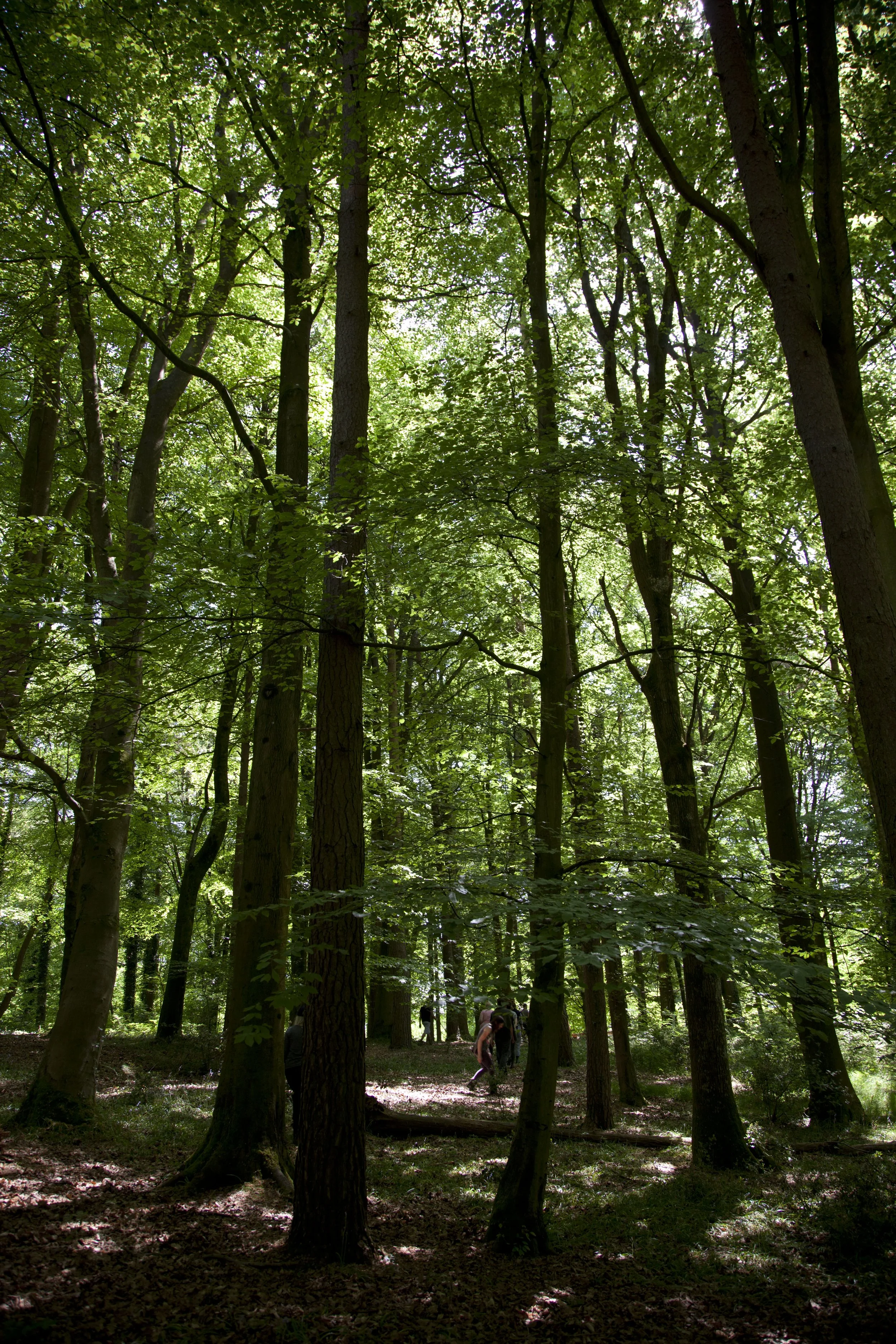
The living world does not operate this way. Ecosystems don't recognise departmental boundaries. Take the relationship between soil biology and canopy structure; the density, height and species mix of trees above determines how much light, rain and leaf litter reaches the ground, shaping the microclimates, temperature and moisture in which fungi, bacteria and invertebrates live. Those organisms decompose organic matter, fix nitrogen and form mycorrhizal networks that feed back into the tree roots, exchanging minerals and water for sugars. The canopy shapes the soil; the soil sustains the canopy. It's a loop, not a hierarchy. Neither is more fundamental than the other.
This is precisely why splitting botany from soil science from ecology into separate departments produces knowledge that is technically accurate but experientially false. You can study each piece without ever understanding the system. The relationship between soil biology and canopy structure, between water retention and community resilience, between human culture and landscape. These aren't optional extras you might choose to add around the edges of your real subject. They are the syllabus itself. By treating connection as peripheral, conventional education has made the most fundamental things optional.
What permaculture offers, and what I try to hold at the centre of the course I teach, is something closer to pattern literacy. Not a list of techniques, not a catalogue of plants, but a way of reading: how to observe a landscape, sense its flows and stresses, understand the people and communities within it and design from that understanding rather than imposing upon it. It's the difference between learning vocabulary and learning grammar. With grammar, you can go on to grow your vocabulary in any context, in any climate.
“Ecological intelligence isn’t only cognitive; it’s sensory, relational, earned through contact with living systems over time.”
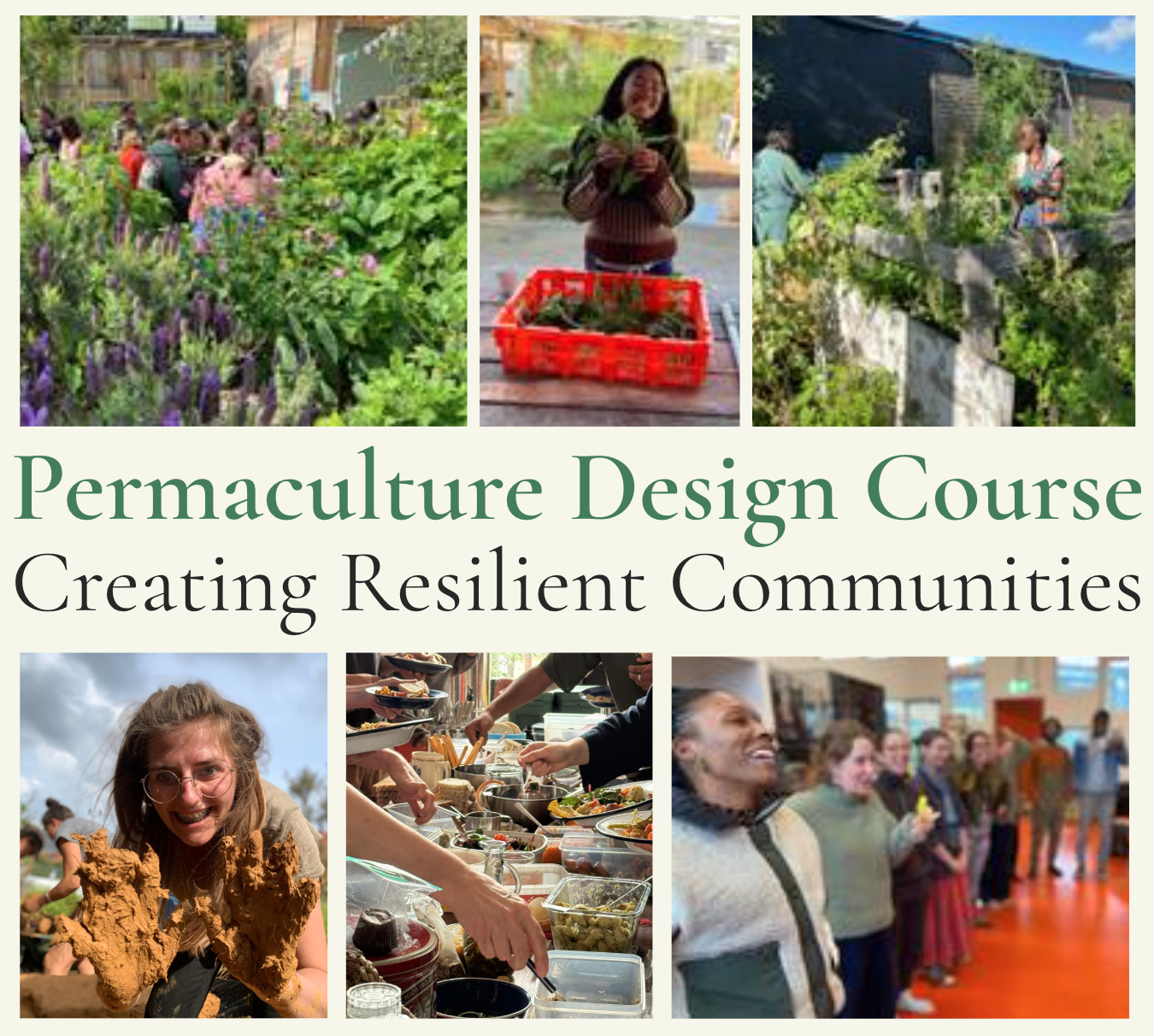
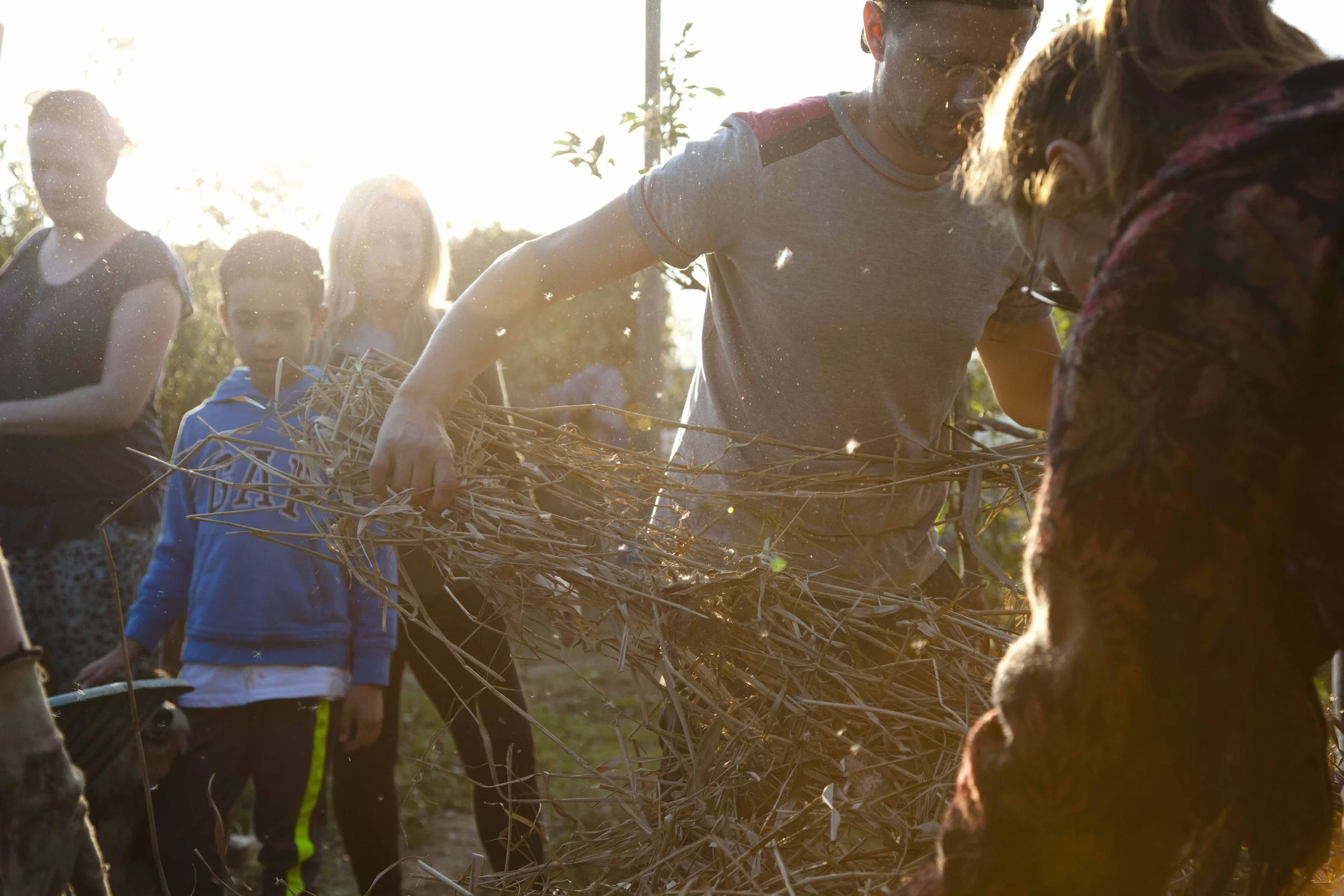
This is also an embodied practice. When students get their hands into compost, harvest herbs, build with cob, grow mushrooms, these aren't simply practical sessions tacked onto a theoretical course. They are a different way of knowing. The body understands things the mind takes longer to reach. Ecological intelligence isn't only cognitive; it's sensory, relational, earned through contact with living systems over time. It doesn’t just come from secondary and tertiary knowledge like learning from books and teachers, but rather from primary observation.
The design project that runs through the course enacts this too. Small groups observe a real piece of land, understand the people connected to it, develop concepts and find ways to visualise and present what they've discovered. There is real art in this, in finding the coherent pattern, the plant guild that creates beneficial relationships between species, the design that holds human need and ecological function in the same gesture. That art cannot be learned from a textbook alone. It requires collaboration, conversation and the willingness to sit with complexity before reaching for a solution.
What would it look like if our wider education system worked this way? If ecology and architecture spoke to each other, not as a special interdisciplinary project, but as a basic condition of learning? If the relationship between disciplines was considered as important as the disciplines themselves?
“The forest already knows how to do this. Every tree is in relationship with its neighbours, with the fungi beneath it, with the water moving through it, with the light above. Nothing in an ecosystem operates in isolation.”
There are schools, practitioners and movements working in exactly this direction. Permaculture is one of them. Agroecology, regenerative design, place-based education, embodied ecology, somatics, all are attempts to restore the connective tissue that reductionist education has, over generations, systematically removed.
The forest already knows how to do this. Every tree is in relationship with its neighbours, with the fungi beneath it, with the water moving through it, with the light above. Nothing in an ecosystem operates in isolation. The question is whether we are willing to learn from that, not just as a metaphor, but as a model for how knowledge itself might be structured, shared and grown.





There's a moment early in the permaculture design course where something shifts. It usually happens quietly, not during a lecture, but in a conversation, or while handling soil, or watching how water moves across a slope. Students stop looking for the answer and start looking at the relationships.
That shift is, I'd argue, the whole point.